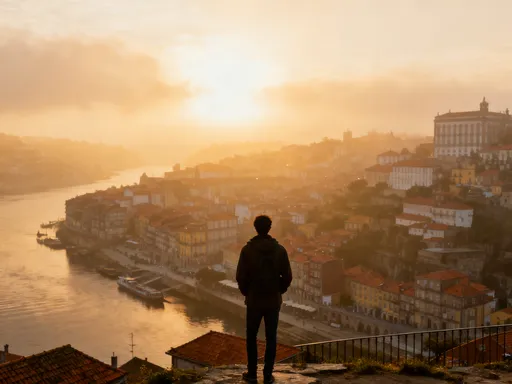
Through the Lens of Culture: Monaco’s Hidden Rhythms in Frame
Ever walked through a place where every corner feels like a living postcard? Monaco isn’t just superyachts and grand prix turns—its soul pulses in quiet plazas, local markets, and centuries-old festivals. I went searching for the real Monaco, camera in hand, and found a world beyond the glamour. This is about catching moments—the laugh of an elder at a street fair, the golden light on a chapel wall, the rhythm of tradition in a modern principality—one shutter click at a time. For travelers seeking depth over dazzle, Monaco offers a subtle yet profound cultural heartbeat, best discovered through patient observation and thoughtful photography.
Beyond the Glamour: Chasing Authenticity in Monaco
Monaco is often portrayed through the lens of excess—gleaming yachts moored along Port Hercules, the thunder of Formula 1 engines echoing through tight city streets, and luxury boutiques lining the boulevards of Monte Carlo. While these elements are undeniably part of the principality’s identity, they represent only a fraction of its true character. Beneath the polished surface lies a quieter, more enduring narrative shaped by generations of Monegasque heritage, Mediterranean influences, and a deep-rooted sense of community. For photographers and culturally curious travelers, this contrast presents a compelling invitation: to look beyond the postcard-perfect façade and seek out the authentic rhythms that define daily life in this compact yet complex nation.
What makes Monaco particularly fascinating is its ability to balance global prestige with local intimacy. With a population of just over 38,000 residents, the country maintains a village-like atmosphere despite its international fame. This duality means that while one can witness high-stakes glamour at the Casino de Monte-Carlo, just a short walk away, an elderly woman might be tending geraniums on her balcony in Monaco-Ville, or children playing football in a sun-drenched square. These unscripted moments are the heart of cultural authenticity, offering rich material for visual storytelling. The key lies in shifting perspective—from passive sightseeing to active engagement with the environment, from chasing iconic landmarks to noticing subtle details like weathered doorways, hand-painted signs, or the way sunlight filters through narrow alleyways.
For photographers, this shift in mindset transforms the experience from documentation to discovery. It encourages slower travel, where time is spent observing rather than rushing from one attraction to the next. A morning spent watching fishermen unload their catch at the Port de Fontvieille, or an afternoon lingering in a neighborhood café where locals sip espresso and discuss the day’s news, reveals layers of life that glossy brochures often overlook. These scenes may not command headlines, but they capture the soul of a place—the enduring customs, the quiet dignity of routine, and the warmth of human connection. By embracing this approach, visitors gain not only compelling images but a deeper appreciation for how tradition and modernity coexist in Monaco’s unique social fabric.
The Heartbeat of Monaco: Traditional Festivals and Seasonal Events
Cultural festivals serve as vibrant windows into Monaco’s living heritage, offering some of the most dynamic opportunities for immersive photography. Among the most celebrated is the annual Monaco Carnival, a multi-day event held each February that transforms the streets into a kaleidoscope of color, music, and movement. Rooted in pre-Lenten traditions, the carnival features elaborate parades with towering papier-mâché figures, costumed performers, and marching bands that wind their way from Place d’Armes through the old town. Unlike commercialized spectacles seen elsewhere, Monaco’s carnival retains a distinctly local flavor, with participation from school groups, community organizations, and families who take pride in preserving this festive legacy. For photographers, the event provides a wealth of visual material—from the intricate details of handmade masks to the spontaneous joy on children’s faces as they follow the parade route.
Another cornerstone of Monegasque culture is the Fête Nationale, celebrated every November 19th in honor of Saint Rainier, the patron saint of the Grimaldi family, and also marking the official holiday of the principality. The day begins with a solemn Mass at the Cathedral of Our Lady Immaculate, where members of the Princely Family attend in formal attire, followed by a grand fireworks display over the harbor. What makes this celebration especially photogenic is the blend of formality and festivity—the precision of military honors contrasted with the exuberance of public celebrations, including folk dances, traditional music, and communal meals shared in public squares. Capturing these moments requires both preparation and sensitivity; arriving early ensures access to prime vantage points along the harborfront, while using longer lenses allows for detailed shots without disrupting the flow of events.
Timing plays a crucial role in maximizing the visual impact of festival photography. The golden hour—shortly after sunrise and before sunset—lends a warm, diffused glow that enhances the textures of costumes and the architecture of surrounding buildings. During the carnival, early morning light illuminates the floats before the crowds gather, allowing for cleaner compositions. Evening events, particularly the fireworks, demand different technical considerations: a tripod, slower shutter speeds, and careful framing to include reflections on the water. Beyond technique, ethical awareness is essential. While candid shots convey authenticity, it is respectful to seek permission when photographing individuals up close, especially children or elders. A smile, a nod, or a simple gesture of acknowledgment can open doors to more meaningful interactions and even invitations to private gatherings, enriching both the photographic outcome and the traveler’s understanding of local customs.
Capturing the Old Town: Monaco-Ville and the Charm of the Rock
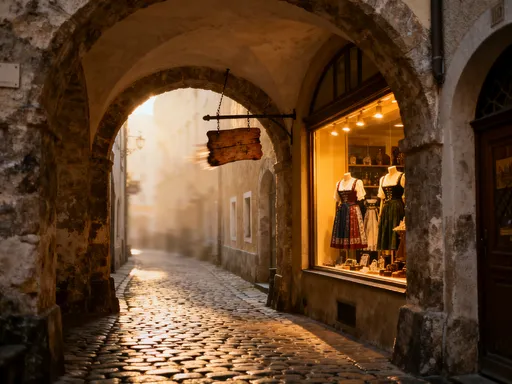
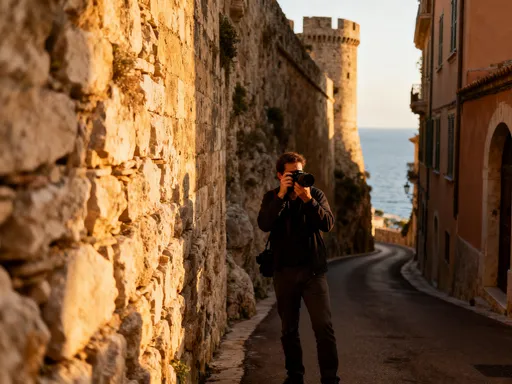
Rising dramatically from the Mediterranean Sea, Monaco-Ville—perched atop Le Rocher—stands as the historic nucleus of the principality. This ancient fortress town, once the stronghold of the Grimaldi dynasty, remains one of the most visually arresting areas for photography. Its labyrinthine streets, built over centuries, wind between ochre-colored stone buildings, arched passageways, and hidden courtyards, creating endless opportunities for atmospheric compositions. The interplay of light and shadow here is extraordinary; morning sun casts long diagonals across cobblestones, while late afternoon light bathes the facades in a golden hue, enhancing the warmth of weathered walls and wrought-iron balconies. For photographers, the challenge and joy lie in navigating this compact district to uncover its many quiet corners, each telling a fragment of Monaco’s long history.
One of the most iconic subjects within Monaco-Ville is the Prince’s Palace, home to the reigning monarch. While the changing of the guard ceremony at 11:55 a.m. draws tourists, the real photographic gems are found in the surrounding alleys and viewpoints. The courtyard of the palace, with its symmetrical layout and ornate stonework, offers a formal composition, but stepping just beyond reveals more intimate scenes—a cat lounging on a sunlit step, a bouquet of flowers left at a shrine, or a fisherman mending nets below at the base of the rock. Similarly, the Cathedral of Our Lady Immaculate, where Prince Rainier III and Princess Grace are entombed, presents both architectural grandeur and solemn beauty. Inside, the play of light through stained glass creates shifting patterns on marble floors, ideal for contemplative interior shots that emphasize stillness and reverence.
For panoramic perspectives, the staircases connecting different levels of the Rock are invaluable. The Escalier du Marché, leading from the Condamine Market up to Monaco-Ville, offers gradual elevation and changing vistas with each turn. At certain landings, framed views of the harbor emerge unexpectedly, with yachts and cruise ships dwarfed by the verticality of the cliffs. A wide-angle lens is particularly effective here, capturing both the architectural depth and the expansive sea beyond. To avoid crowds, visiting early in the morning—between 7:00 and 9:00 a.m.—is highly recommended. During these hours, the streets are nearly empty, allowing for unobstructed shots and a more meditative pace. The absence of traffic noise enhances the sense of timelessness, making it easier to imagine the Rock as it appeared centuries ago, when sentries kept watch for approaching ships and fishermen returned with their daily catch.
Street Life and Local Markets: The Pulse of Daily Culture
If festivals and historic sites reveal Monaco’s ceremonial soul, its markets and neighborhood streets reflect the rhythm of everyday life. The Condamine Market, officially known as Marché de la Condamine, is a cornerstone of local commerce and community interaction. Open daily except Mondays, this covered market hall buzzes with activity from early morning until mid-afternoon, drawing residents from across the principality. Inside, stalls overflow with fresh produce—plump tomatoes, fragrant herbs, ripe figs, and glossy eggplants—alongside regional specialties such as socca (a chickpea pancake), olives, goat cheese, and locally caught seafood. The sensory richness of the space—the scent of basil and salt air, the chatter of vendors, the gleam of fish scales under fluorescent lights—makes it a compelling subject for documentary photography.
What sets the Condamine Market apart is its authenticity. Unlike tourist-oriented bazaars, this is a working market where Monegasques and long-term residents come to shop, exchange news, and maintain social ties. Photographers can capture genuine moments of interaction: a grandmother haggling over the price of artichokes, a fishmonger wrapping sea bass in paper, or friends pausing for coffee at a nearby café. The key to successful street photography here is discretion and respect. Using a compact camera or a telephoto lens allows for candid shots without intrusion. Shooting from the side rather than directly in front of subjects minimizes disruption, while waiting for natural pauses in action—such as a vendor arranging lemons or a customer checking her purse—creates more authentic compositions.
Lighting within the market hall can be uneven, with patches of natural light filtering through skylights and artificial illumination creating contrast. Adjusting ISO settings and using aperture priority mode helps manage exposure, while shooting in RAW format preserves detail for later editing. Beyond technical considerations, building rapport with vendors can lead to more engaging images. A simple greeting in French or Italian often opens the door to smiles and even posed portraits. Some may invite you to photograph their stall up close, showcasing the care they take in presentation. These small exchanges not only improve photo quality but also foster mutual respect, reminding travelers that photography, at its best, is a form of connection rather than extraction.
Sacred Spaces: Churches and Chapels as Cultural Canvases
Religious architecture in Monaco serves not only spiritual functions but also acts as a repository of cultural memory and artistic expression. Among the most significant is the Cathedral of Our Lady Immaculate, constructed in the late 19th century in a Romanesque-Byzantine style. Its pale stone exterior and twin bell towers dominate the skyline of Monaco-Ville, while the interior unfolds as a tapestry of devotion and craftsmanship. Frescoes depicting biblical scenes line the nave, golden mosaics shimmer above the altar, and marble columns support vaulted ceilings painted with celestial motifs. For photographers, the cathedral offers a masterclass in capturing texture, symmetry, and sacred silence. The challenge lies in conveying reverence without compromising image quality—avoiding flash, minimizing noise, and composing shots that honor the space’s solemnity.
Another notable site is the Chapelle de la Miséricorde, one of the oldest churches in Monaco, dating back to the 17th century. Located near the Port, this intimate chapel features a Baroque interior with intricately carved woodwork, gilded altarpieces, and stained glass windows that filter sunlight into pools of color on the stone floor. Unlike larger cathedrals, the Miséricorde retains a domestic scale, making it feel personal and accessible. Photographing such spaces requires patience—waiting for moments when the chapel is empty, or when a single visitor kneels in prayer, adds emotional depth to images. Wide-angle shots can emphasize architectural harmony, while macro settings reveal the fine details of embroidery on vestments or the patina of centuries-old wood.
Respectful photography in sacred spaces means adhering to local norms. Many churches request silence and prohibit photography during services, so visiting outside of Mass times—typically mid-morning or early afternoon—is advisable. When images are permitted, photographers should avoid pointing cameras directly at worshippers and refrain from using tripods in confined areas. These practices ensure that the act of photographing does not disrupt the sanctity of the environment. Ultimately, capturing these spaces is not just about aesthetics but about bearing witness to continuity—the way faith, art, and tradition are preserved across generations in a small nation navigating modernity.
The Art of Integration: Blending In as a Photographer
In a place as compact and observant as Monaco, being a respectful photographer is not merely courteous—it is essential. The principality’s close-knit communities value privacy and dignity, and intrusive behavior can quickly sour the visitor experience. The most effective approach is one of quiet integration: moving slowly, observing first, and photographing only when the moment feels natural. This begins with awareness of body language—keeping the camera at waist level rather than raised to the eye reduces the sense of surveillance, while avoiding long telephoto lenses prevents the impression of spying. When photographing people, especially in markets or during festivals, a brief eye contact or nod can signal intent and openness, often leading to smiles or tacit permission.
Asking for consent, particularly for portraits, is a practice that fosters trust and often results in more authentic images. In many cases, locals are happy to be photographed if approached politely and given control over how they are represented. A simple “May I take your picture?” accompanied by a smile can open conversations that lead to deeper cultural insights. Some may share family stories, recommend hidden spots, or invite you to return during a private celebration. These interactions enrich the photographic journey, transforming it from a solitary pursuit into a shared experience. Moreover, carrying printed photos or sharing digital copies later—when possible—can leave a lasting positive impression.
Equally important is understanding the boundaries of public and private space. While streets and markets are generally fair game for photography, residential courtyards, private gardens, and interiors of homes should be avoided unless explicitly invited. Similarly, photographing children should be done with extreme care, always seeking parental consent. By practicing ethical awareness, photographers not only protect themselves from conflict but also contribute to a culture of mutual respect. In doing so, they honor the very essence of cultural documentation: not to extract, but to engage; not to exploit, but to understand.
From Click to Story: Curating a Cultural Narrative
A single photograph can capture a moment, but a collection of images can tell a story—one that transcends aesthetics to speak of identity, resilience, and belonging. In Monaco, where tradition and modernity exist in constant dialogue, curating a visual narrative requires intentionality. It means selecting images that reflect not just beauty, but meaning: the hands of an elderly artisan repairing a fishing net, the folds of a folk costume preserved through generations, the quiet dignity of a chapel where centuries of prayers have echoed. These photographs, when arranged thoughtfully, form a timeline of cultural continuity, illustrating how a small nation maintains its heritage amidst global currents.
Creating such a narrative begins with reflection. After returning from a shoot, reviewing images with a critical eye helps identify recurring themes—light, gesture, color, or architecture—that emerge organically. Grouping photos by mood or location can reveal patterns: dawn shots in Monaco-Ville may convey stillness, while festival images radiate energy. Sequencing them to mirror the rhythm of a day—from early morning in the market to evening fireworks—adds structure and flow. Captioning each image with context—names, dates, brief anecdotes—preserves memory and deepens impact, turning a photo album into a personal archive of cultural discovery.
For those who wish to share their work, whether through exhibitions, books, or online platforms, the goal should be education and appreciation, not exoticization. Presenting Monaco not as a playground for the elite, but as a living community with deep roots, challenges stereotypes and fosters cross-cultural understanding. It reminds viewers that even in the most glittering corners of the world, humanity thrives in the quiet moments—the shared meal, the whispered prayer, the child’s laugh in a sunlit square. Through the lens, we do more than record; we remember. And in remembering, we honor the hidden rhythms that make Monaco, and every culture, truly unforgettable.