You Won’t Believe How Florence’s Festivals Turn Into Instagram Magic
Florence isn’t just about Renaissance art and skyline views—it’s alive with festival energy that feels straight out of a dream. I’ve never seen streets transform so dramatically, with lights, music, and centuries-old traditions lighting up every corner. As someone who travels for moments you can’t fake on camera, I was blown away by how effortlessly the city becomes a living photo album. This is culture you don’t just see—you feel it, wear it, and definitely photograph it. Every cobblestone seems to echo with celebration, and every piazza pulses with life during festival season. Florence doesn’t perform its heritage; it lives it, inviting visitors to witness history not behind glass, but in full color, sound, and motion. For those who seek beauty that transcends postcards, Florence’s festivals offer an authentic, deeply moving canvas—one that lingers long after the shutter clicks.
The Heartbeat of Florence: Where Art Meets Celebration
Florence has long been celebrated as the cradle of the Renaissance, a city where art, architecture, and intellect flourished under the patronage of the Medici. Yet beyond its museums and marble façades lies a living culture that pulses with seasonal rhythm—its festivals. These events are not mere tourist spectacles; they are deeply rooted expressions of civic identity, where centuries-old traditions are honored with pride and pageantry. The city’s public spaces—Piazza della Signoria, Ponte Vecchio, and the Cathedral Square—transform from everyday landmarks into vibrant stages for music, reenactments, and communal joy. This seamless fusion of art and celebration reveals a Florence that is not preserved in time, but actively shaped by it.
What sets Florence’s festivals apart is their authenticity. Unlike commercialized events in other cities, these celebrations are organized and participated in by locals who view them as integral to their cultural continuity. The festivals often coincide with religious feast days, historical anniversaries, or seasonal changes, each carrying symbolic meaning passed down through generations. For instance, the Feast of San Giovanni, the city’s patron saint, is celebrated every June 24th with fireworks over the Arno River, a tradition dating back to the 16th century. The riverbanks fill with families, children clutch balloons, and the sky erupts in color—an image both timeless and deeply personal to Florentines.
For travelers, this means more than just viewing a show—it means stepping into a shared cultural moment. The atmosphere is one of warmth and inclusion, where visitors are welcomed not as spectators but as guests in a city-wide gathering. The emotional resonance of these experiences is what makes them so photographable; they capture genuine emotion, unscripted interactions, and the beauty of community. Whether it’s an elderly couple dancing in the square or a child marveling at a torchlit procession, these are the moments that define Florence’s soul and make every photograph feel alive.
La Festa de’ Magi: A Parade That Feels Like Time Travel
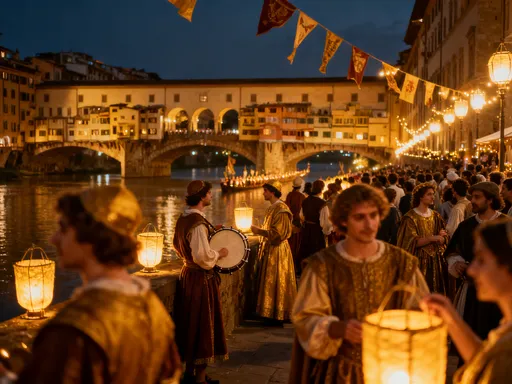
One of Florence’s most enchanting festivals is La Festa de’ Magi, a grand historical procession that revives the city’s 15th-century Epiphany celebrations. Originally organized by the Medici family as a display of wealth and devotion, the event was revived in the early 2000s as part of a broader effort to reconnect with Florence’s cultural roots. Today, it draws thousands who line the streets to witness a breathtaking journey back in time. The parade begins at the Basilica of San Marco and winds through the heart of the city, culminating at the Duomo, retracing the route believed to have been taken by the original Magi procession over 500 years ago.
The visual spectacle is nothing short of cinematic. Over 700 participants, dressed in meticulously recreated Renaissance costumes, march in perfect formation. Horse-drawn carriages adorned with gold leaf and velvet banners carry figures representing the Three Kings, their entourages, and noble attendants. Musicians play period instruments, adding a haunting, melodic backdrop to the rhythmic clatter of hooves on cobblestone. Flags bearing ancient family crests flutter in the wind, and incense fills the air, evoking a sensory experience that feels both sacred and theatrical. For photographers, every turn offers a new composition: a close-up of an embroidered sleeve, a wide-angle shot of the procession against the Duomo’s façade, or a candid moment of awe on a child’s face.
To truly appreciate and capture the essence of La Festa de’ Magi, timing and positioning are crucial. The best viewing spots are along Via de’ Cerretani and Piazza del Duomo, but these areas fill up early—often two to three hours before the parade begins. Arriving by 9 a.m. ensures a clear line of sight and enough space to set up a tripod without obstructing the view of others. For more intimate shots, consider the stretch near San Lorenzo Market, where the crowd is thinner and the lighting softer in the morning sun. Avoid using flash, as it disrupts the natural ambiance and can be distracting to participants in character.
Equally important is respecting the ceremonial nature of the event. While it’s tempting to step into the procession for a dramatic photo, doing so breaks the immersion and disrespects the months of preparation by the reenactors. Instead, focus on capturing the atmosphere—the way light catches a gold-threaded cape, or how the crowd’s murmurs fall silent as the Magi pass by. These subtle details convey the reverence and magic of the moment far more powerfully than any posed shot ever could.
Calcio Storico: When Sport Becomes Spectacle
Every June, Piazza Santa Croce undergoes a dramatic transformation. The peaceful square, usually filled with tourists sipping espresso and admiring the basilica, becomes the arena for Calcio Storico—a 16th-century form of football that blends sport, combat, and theatrical performance. Originating in the 1500s as a noble pastime, Calcio Storico was played by aristocrats in full Renaissance attire and has since evolved into one of Florence’s most iconic festivals. Today, it’s a fierce competition between the city’s four historic districts—Santa Croce (the Azzurri), Santa Maria Novella (the Rossi), Santo Spirito (the Bianchi), and San Giovanni (the Verdi)—each representing a neighborhood with deep-rooted pride and rivalry.
The game itself is unlike any modern sport. Played on a sand-covered field, it combines elements of soccer, rugby, and wrestling, with 27 players per team allowed to use both hands and feet. Matches last 50 minutes with no substitutions, and physical contact is not only permitted—it’s expected. The atmosphere is electric, with drumlines pounding, flag-wavers spinning colorful banners, and crowds chanting their district’s colors. The players, dressed in vibrant silk uniforms and leather sandals, move with a mix of athleticism and theatrical flair, turning every tackle and goal into a dramatic performance. For photographers, the visual contrast is striking: the bright costumes against the stone backdrop of the basilica, the dust rising from the field, and the raw emotion on players’ faces create a feast of dynamic compositions.
Attending Calcio Storico requires planning. Tickets sell out months in advance, especially for the final match, so booking through the official city tourism office or authorized vendors is essential. Seating is arranged around the field, with grandstand views offering the best vantage for wide-angle shots, while ground-level spots allow for dramatic low-angle perspectives. Sunset games, often held on the final evening, provide golden-hour lighting that enhances the textures of fabric and stone. Dressing in your district’s colors—red, blue, white, or green—adds to the immersive experience and helps you blend in with the local fans, making for more natural, candid photographs.
Despite its intensity, Calcio Storico is deeply ceremonial. The event begins with a grand parade of participants, accompanied by historical reenactors and musicians, reinforcing its cultural significance. It’s not merely a game; it’s a living tradition that embodies Florentine pride, resilience, and community spirit. Capturing this spirit means going beyond action shots—look for moments of camaraderie, quiet focus before the match, or the emotional embrace of teammates after a hard-fought game. These images tell a richer story than any highlight reel ever could.
Summertime Lights: Estate Fiorentina’s Nighttime Glow
From June through September, Florence comes alive after dark with Estate Fiorentina, a city-wide summer festival that transforms museums, gardens, and piazzas into open-air venues for culture and celebration. This annual event extends the city’s cultural offerings well beyond daylight hours, inviting both locals and visitors to experience Florence in a new light—literally. Museums such as the Uffizi and Palazzo Pitti remain open until midnight, while the Boboli Gardens and Bardini Gardens are illuminated with soft, artistic lighting that highlights their fountains, sculptures, and terraced pathways. Outdoor concerts, film screenings, and dance performances take place in courtyards and parks, creating a magical atmosphere that blends art, nature, and community.
One of the most photogenic moments of Estate Fiorentina is the nightly illumination of the Basilica of San Miniato al Monte. Perched on a hill overlooking the city, the church glows in warm golden light, its Romanesque façade standing in serene contrast to the twinkling city below. The pathway leading up to it, lined with cypress trees and dotted with small candlelit shrines, offers endless opportunities for atmospheric long-exposure shots. Similarly, the illuminated dome of the Duomo, visible from nearly every vantage point, becomes a beacon of cultural continuity, linking past and present in a single frame.
For photographers, the key to capturing Estate Fiorentina lies in timing and preparation. The golden hour—just after sunset—provides a soft, warm light that enhances the textures of stone and foliage. By 9 p.m., artificial lighting takes over, creating dramatic contrasts between light and shadow. A tripod is essential for long exposures, especially when photographing fountains or candlelit pathways. Using a low ISO setting (100–200) helps minimize noise, while a wide aperture (f/2.8–f/5.6) allows for greater light capture in dimly lit areas. Smartphone apps such as “Florence Festival Guide” and “Eventbrite Italy” provide real-time updates on concert schedules, location maps, and crowd levels, helping you plan your route efficiently.
But beyond the technical aspects, Estate Fiorentina is about atmosphere. It’s the laughter of families picnicking in the gardens, the murmur of a jazz ensemble under the stars, the quiet awe of an elderly couple gazing at a Renaissance painting in near-empty halls. These are the human moments that give the festival its soul. Capturing them requires patience and presence—putting the camera down occasionally to simply absorb the beauty around you. When you do press the shutter, it’s not just a photo you’re taking; it’s a memory you’re preserving.
Hidden Festivities: Local Neighborhood Celebrations Worth Chasing
Away from the well-trodden paths of the historic center, Florence’s outer neighborhoods host some of its most authentic and heartfelt festivals. Districts like Oltrarno, San Frediano, and Gavinana come alive each summer with sagre—local street festivals that celebrate everything from saint’s days to seasonal harvests. These events are organized by neighborhood committees, volunteer groups, and church parishes, making them deeply rooted in community life. Unlike the grand, city-sponsored spectacles, sagre have a humble, unpolished charm: long tables under string lights, the sizzle of sausages on grills, the strum of folk guitars, and the clink of wine glasses raised in toast.
One of the most beloved is the Festa di San Giovanni in San Frediano, held every June. Though smaller in scale than the official city celebrations, it radiates warmth and intimacy. The narrow streets of the neighborhood are closed to traffic, strung with paper lanterns, and lined with food stalls offering lampredotto (a traditional Florentine sandwich), cantucci with Vin Santo, and freshly made gelato. Children play bocce in the piazza, while elders sit on folding chairs, sharing stories and laughter. The highlight is a live music performance, often featuring local folk bands playing traditional Tuscan songs. For photographers, this is a treasure trove of candid, emotionally rich images—no staging required.
Another gem is the Festa dell’Olivo in the Boboli Gardens’ surrounding neighborhoods, celebrating the olive harvest with oil tastings, craft markets, and olive-pressing demonstrations. Artisans sell handmade soaps, ceramics, and woven goods, while families gather for communal meals under the trees. These festivals offer a rare glimpse into everyday Florentine life, far removed from the tourist gaze. They are also ideal for capturing cultural details that often go unnoticed: the texture of a wooden serving spoon, the creases in an elderly woman’s hands as she kneads dough, the way sunlight filters through a canopy of leaves onto a violinist’s face.
Participating in these neighborhood festivals means embracing a slower pace of travel. There are no timed entries or ticketed sections—just an open invitation to join in. A simple “buonasera” and a smile go a long way in building rapport with locals. If you wish to photograph someone, a polite gesture or verbal request in basic Italian (“Posso fare una foto?”) is both respectful and appreciated. These small acts of connection often lead to the most meaningful travel experiences—and the most authentic photographs.
Capture Like a Pro: Instagram Tips Rooted in Respect
In the age of social media, Florence’s festivals offer endless inspiration for Instagram-worthy content. Yet with great visual potential comes great responsibility. The goal should not be to accumulate likes, but to honor the culture you’re documenting. Authenticity begins with awareness—understanding that every ritual, costume, and melody has meaning beyond its aesthetic appeal. A respectful approach ensures that your photography enhances, rather than exploits, the experience.
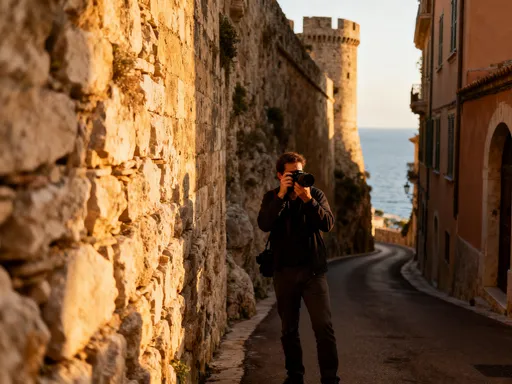
Start with lighting. Natural light is your best ally, especially during the golden hour (one hour after sunrise and before sunset), when the warm glow enhances skin tones and architectural details. In low-light settings like evening processions or candlelit churches, use a lens with a wide aperture (f/1.4 to f/2.8) to allow more light in without increasing ISO too much. A 35mm or 50mm prime lens is ideal for street photography, offering sharp detail and beautiful background blur. For wider scenes—like a full procession or a panoramic view of an illuminated piazza—a 24mm lens provides excellent coverage.
Composition matters, but so does context. Instead of isolating a single subject, try to include elements of the environment—banners in the wind, reflections in puddles, shadows on stone walls. These details ground the image in place and time. Use the rule of thirds to create balance, but don’t be afraid to break it for dramatic effect. A centered portrait of a reenactor in full regalia, staring directly into the lens, can be powerfully evocative.
Most importantly, practice ethical photography. Always ask permission before photographing individuals, especially children and the elderly. If someone declines, respect their decision without argument. Avoid using flash during ceremonies, as it can be disruptive and even disrespectful. Never obstruct pathways or block views for a better shot—your presence should enhance the experience for everyone, not detract from it. When in doubt, observe how locals behave and follow their lead. By photographing with humility and heart, you create images that are not only beautiful but meaningful.
Why Festival Culture Defines Florence’s Soul
Florence’s festivals are more than seasonal attractions—they are the heartbeat of the city’s cultural identity. Unlike static exhibits in glass cases, these events bring history to life, allowing travelers to walk through time, hear ancient melodies, and feel the pulse of communal pride. They remind us that culture is not something to be merely observed, but lived, shared, and passed on. In a world where authenticity is often diluted for mass consumption, Florence stands as a testament to the power of tradition held with reverence and joy.
For the modern traveler, these festivals offer a rare opportunity to move beyond surface-level tourism. They invite you to slow down, to engage, to listen. To stand in a crowded piazza and feel the drumbeats of Calcio Storico vibrate in your chest. To watch an elderly artisan light a candle during a neighborhood sagra and realize you’re witnessing a ritual unchanged for generations. These are the moments that transform a trip into a journey—one that reshapes how you see the world and your place in it.
And when you raise your camera, it’s not just to capture a scene, but to honor it. Every photograph becomes a tribute—to the city, to its people, to the enduring spirit of celebration. So the next time you plan a visit to Florence, don’t just check off the museums and monuments. Time your trip with a festival. Let the city’s rhythm guide you. Step into the light, the music, the history. Let Florence not only fill your lens, but also your heart. Because the true magic of this city isn’t just in what you see—it’s in what you feel, remember, and carry home with you.