You Won’t Believe What I Found While Shopping in Salzburg
If you think Salzburg is just Mozart and mountains, think again. I went looking for souvenirs but stumbled upon something way more exciting—hidden boutiques, local artisans, and markets bursting with charm. Shopping here isn’t just about buying things; it’s a journey into Alpine culture, tradition, and unexpected style. Let me take you through the side of Salzburg most tourists miss. This is not the curated image of postcards and concert halls, but a living, breathing city where craftsmanship thrives in narrow alleyways and weekly markets. It’s where heritage meets innovation, and every purchase tells a story. From hand-carved wooden ornaments to small-batch honey harvested from mountain hives, Salzburg offers a sensory-rich alternative to generic gift shops. What I discovered was not merely shopping—it was connection, authenticity, and quiet beauty woven into everyday life.
Beyond the Sound of Music: Salzburg’s Underrated Shopping Scene
Salzburg is often celebrated for its musical legacy and Baroque architecture, but beneath its classical surface lies a vibrant, underappreciated shopping culture. While many visitors come for the festivals and the Mirabell Gardens, few realize that the city’s true retail soul resides in its intimate lanes and neighborhood markets. Unlike larger European capitals where shopping feels commercialized, Salzburg maintains a human scale—where shopkeepers remember your name and artisans speak passionately about their work. The city’s compact size makes exploration effortless, with clusters of specialty stores nestled between historic churches and riverside promenades. This intimacy fosters discovery, allowing travelers to encounter goods shaped by generations of Alpine tradition rather than mass production.
What sets Salzburg apart is how seamlessly commerce blends with culture. A visit to a local store is rarely transactional; it’s often a conversation. Whether you’re browsing hand-knit wool scarves or sampling herbal teas made from alpine herbs, there’s a sense of continuity—of practices passed down through families and adapted for modern tastes. Many of these shops are family-run, operating out of centuries-old buildings where the scent of aged wood mingles with the fragrance of beeswax candles. These spaces aren’t designed for Instagram aesthetics but for authenticity, offering items that reflect the region’s values: durability, simplicity, and care.
Yet, this dimension of Salzburg remains overlooked, often overshadowed by its musical fame. Travelers tend to equate the city with guided tours and sound-of-music-themed bus rides, missing the quieter rhythm of daily life that unfolds in its market squares and artisan workshops. But for those willing to wander beyond the main plazas, the rewards are tangible. You’ll find yourself holding a hand-painted ornament made by a third-generation ceramicist or sipping elderflower syrup at a stall run by a farmer from the nearby Pongau valley. These experiences transform shopping from a chore into a form of cultural immersion—one that deepens your understanding of Austria not as a museum piece, but as a living, evolving place.
Getreidegasse: Where Tradition Meets Trend
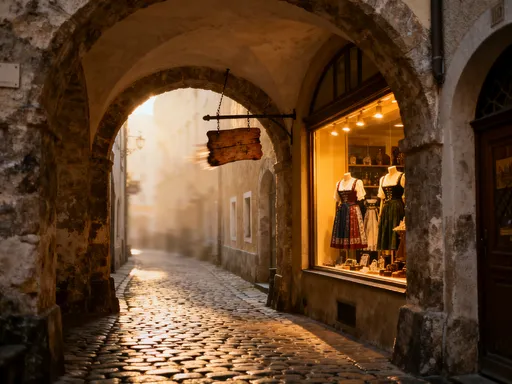
No visit to Salzburg’s shopping landscape is complete without walking down Getreidegasse, the city’s most iconic pedestrian street. Lined with wrought-iron signs swinging above arched arcades, this 1,300-meter lane pulses with history and commerce. Originally a medieval grain market—its name derives from “Getreide,” meaning grain—today it serves as a curated blend of heritage and modernity. While international brands like Zara and Swarovski have established outposts here, they coexist with centuries-old family businesses and niche boutiques that give the street its distinctive character.
One of the most compelling aspects of Getreidegasse is its ability to balance accessibility with authenticity. Tourists flock here for recognizable names, yet tucked between them are stores offering dirndls with custom embroidery, hand-forged cutlery, and traditional Austrian hats made from felted wool. A visit to a local dirndl shop reveals more than fashion—it’s a glimpse into regional identity. These dresses, often worn during festivals like Oktoberfest or local weddings, are available in modern cuts and sustainable fabrics, proving that tradition can evolve without losing meaning. The shopkeepers, many of whom have dressed generations of Austrian women, are eager to explain fabric choices, regional variations, and proper styling, turning a simple fitting into a cultural exchange.
To make the most of Getreidegasse, timing is essential. The street reaches peak congestion between 11 a.m. and 3 p.m., especially in summer months when tour groups arrive in waves. For a more relaxed experience, visit early in the morning when shop windows are freshly lit and the cobblestones glisten from overnight rain. This is also when bakers open their doors, filling the air with the scent of warm pretzels and apple strudel. On weekday afternoons, many store owners take short breaks, offering a chance to chat without the pressure of a crowded counter. Evenings bring a different charm—soft lighting, fewer crowds, and occasional street musicians adding to the ambiance without overwhelming it.
Despite its popularity, Getreidegasse rewards slow exploration. Look beyond the storefronts: notice the intricate metalwork on the signs, the way sunlight filters through the arcades, and the care with which goods are displayed. This is not a strip mall but a living street where commerce, history, and craftsmanship intersect. By resisting the urge to rush, visitors can appreciate not just what is sold, but how and why it matters.
Hidden Markets and Local Flair at Volksgarten Market
A short walk from the tourist bustle of the Altstadt, the Volksgarten Market offers a refreshingly local alternative. Held every Thursday and Saturday morning, this weekly farmers’ and crafts market draws residents from across Salzburg, creating a space where community and commerce blend naturally. Unlike souvenir-heavy plazas, Volksgarten focuses on quality, seasonality, and sustainability. Stalls overflow with organic vegetables, artisanal cheeses, freshly baked bread, and handmade body products—all sourced from small farms and independent producers within a 50-kilometer radius.
The sensory experience here is immediate and immersive. The sharp tang of raw goat cheese mixes with the sweetness of ripe apricots. Sunlight catches droplets on bunches of herbs—rosemary, thyme, and mountain savory—while beeswax candles flicker gently on wooden tables. Vendors greet regulars by name, offering samples with a smile. A woman selling hand-dipped candles might explain how she uses only pure beeswax from local hives, avoiding synthetic dyes and paraffin. A honey farmer from the Lungau region describes how high-altitude flora gives his product a delicate, floral note distinct from lowland varieties. These interactions aren’t performative—they’re genuine exchanges rooted in pride and knowledge.
What makes Volksgarten special is its lack of pretense. There are no souvenir Mozart wigs or plastic edelweiss pins here. Instead, you’ll find linen aprons stitched by hand, herbal salves made with calendula and chamomile, and jars of wild berry jam harvested from forest clearings. Many items double as meaningful gifts—beautiful, useful, and deeply connected to place. For visitors, this market offers a rare opportunity to engage with Austrian daily life beyond the curated attractions. It’s where you learn that “Alpine” isn’t just a design trend but a way of living shaped by seasons, terrain, and tradition.
Comparing Volksgarten to tourist-centric shopping areas highlights its authenticity. While the latter often relies on repetition and mass production, Volksgarten celebrates uniqueness and seasonality. A basket of mushrooms sold in October won’t appear in May. A wool hat knitted in winter may be replaced by woven sun hats in summer. This rhythm reflects a deeper respect for nature’s cycles—a value embedded in Austrian culture. For travelers, shopping here becomes an act of participation, not just observation. By choosing a jar of honey or a bar of soap, you support small-scale producers committed to quality and sustainability, reinforcing a system that values people and planet over profit.
Craftsmanship Alive: Meeting Artisans in the Old Town
One of Salzburg’s quietest treasures lies in its network of small workshops, where traditional crafts are not preserved behind glass but practiced daily. Tucked into side streets and courtyard buildings, these studios keep alive skills that have shaped Alpine communities for centuries. From woodcarving to pottery and glassblowing, each craft tells a story of resilience, adaptation, and artistry. While some workshops are centuries old, others are run by younger artisans who blend ancestral techniques with contemporary design, ensuring these traditions remain relevant.
A visit to a woodcarving studio offers a powerful example. Inside a dimly lit workshop, the air is rich with the scent of fresh pine and linseed oil. A craftsman, hands steady despite decades of work, shapes a piece of linden wood into a delicate nativity figure. The tools are simple—chisels, gouges, and mallets—but the precision is extraordinary. Every cut follows the grain, respecting the material’s natural form. These figures, often made for Christmas markets, are not mass-produced replicas but unique works, each with subtle differences in expression and posture. The artist explains that the tradition dates back to the 17th century, when rural families crafted figures to tell biblical stories during long winters. Today, the practice endures, not as nostalgia, but as a living art form.
Similarly, local potters use clay sourced from the Salzach River, shaping it on hand-turned wheels and firing it in wood-burning kilns. The resulting pieces—mugs, bowls, vases—bear the marks of the maker’s hands, with slight irregularities that speak to authenticity. Glazes are often derived from natural minerals, producing earthy tones that echo the surrounding landscape: forest green, mountain gray, alpine white. Glassblowers, working in small teams, heat recycled glass to molten temperatures, shaping vases and ornaments with long metal pipes. The process is mesmerizing—fluid, collaborative, and slightly unpredictable.
Supporting these artisans matters. Each purchase helps sustain a craft that might otherwise fade in the face of industrialization. Travelers can identify true handmade goods by looking for slight imperfections, visible tool marks, and detailed explanations from the maker. Labels like “handgefertigt” (handmade) are common, but the real proof lies in the story behind the object. When you buy a hand-carved spoon or a blown-glass ornament, you’re not just acquiring a souvenir—you’re preserving a legacy.
Design with an Alpine Twist: Modern Boutiques Off the Beaten Path
Beyond the historic core, Salzburg’s creative energy reveals itself in quiet neighborhoods where independent designers are redefining Alpine style. These boutiques, often hidden in side alleys or converted townhouses, offer fashion and home goods that honor tradition while embracing modern minimalism. Here, wool isn’t just for ski sweaters—it’s transformed into tailored coats with clean lines. Linen textiles feature patterns inspired by mountain flora, and ceramics echo the shapes of glacial stones.
One such store specializes in sustainable fashion, sourcing wool from Austrian farms and dyeing fabrics with plant-based pigments. The owner, a textile designer trained in Vienna, explains how she collaborates with shepherds to ensure ethical treatment of animals and minimal environmental impact. Her collection includes reversible jackets, oversized scarves, and unisex vests—each piece designed for longevity rather than trendiness. Another boutique focuses on home décor, showcasing hand-thrown pottery, beeswax candles, and linen table runners embroidered with subtle edelweiss motifs. The aesthetic is understated but rich in detail, appealing to those who value quality over quantity.
Navigating these areas requires curiosity and a willingness to wander. The districts of Aigen and Riedenburg, just a short walk from the city center, are particularly rich in such finds. Streets here are lined with pastel-colored homes, flower boxes, and independent galleries. Signage is minimal, encouraging exploration by foot. A narrow doorway might lead to a courtyard studio; a quiet shop window might display a single, perfectly crafted object. These spaces are not designed for high turnover but for connection—with materials, with process, with the people who make and buy them.
What to look for? Quality craftsmanship is evident in the weight of a ceramic mug, the evenness of a knit stitch, the smooth finish of a wooden spoon. Labels often indicate origin and production method, but the best signal is the presence of the maker or a detailed story about the work. These boutiques aren’t just stores—they’re extensions of the creative process, where design meets dialogue and objects carry meaning.
Sweet Treats and Gourmet Stops: Shopping for Taste
No exploration of Salzburg’s shopping culture is complete without indulging in its edible offerings. The city has long been a haven for confectioners, bakers, and spice merchants, producing treats that delight the palate and travel well. Chief among them is the Mozartkugel, the iconic marzipan, nougat, and chocolate confection invented in the late 19th century. While mass-produced versions are widely available, the true experience lies in visiting traditional confectioneries that make them by hand.
One such shop, operating since 1890, prepares Mozartkugeln in small batches, using dark chocolate tempered to a glossy finish and marzipan made from finely ground almonds. The process is meticulous—each layer is applied by hand, ensuring a perfect balance of flavors and textures. Visitors can watch through a glass window as confectioners dip, roll, and wrap each piece, a ritual unchanged for generations. These handmade versions are more nuanced than their commercial counterparts, with less sweetness and a deeper chocolate flavor. They make excellent gifts, especially when packaged in elegant tins or fabric-wrapped boxes.
But Salzburg’s gourmet offerings extend far beyond Mozartkugeln. Local chocolatiers experiment with alpine herbs, infusing dark chocolate with spruce tips or mountain thyme. Bakeries sell honey cakes made with regional honey, their dense crumb moist and aromatic. Spice shops offer blends featuring smoked paprika, caraway, and alpine salt harvested from ancient deposits. Delis stock jars of fruit preserves—quince, elderberry, wild plum—each labeled with the harvest date and farm of origin.
When shopping for food items, a few practical tips ensure freshness and ease of transport. Chocolate should be stored in cool, dry places and packed in insulated containers if traveling to warm climates. Jams and honey are generally safe in checked luggage, though it’s wise to double-wrap jars. For spices and dried goods, resealable bags or tins help preserve flavor. Most importantly, buy from trusted sources—established shops with clear labeling and hygienic practices. This not only guarantees quality but supports local producers committed to excellence.
Smart Shopping: Practical Tips for a Smooth Experience
To fully enjoy Salzburg’s shopping scene, a few practical considerations go a long way. First, while most stores accept major credit cards, carrying some cash—especially in smaller denominations—remains useful, particularly at markets and small boutiques. Coins are needed for public restrooms and some parking meters, so having a small supply ensures convenience.
Non-EU visitors should inquire about VAT refunds, which apply to purchases over €75 at participating stores. The process is straightforward: request a tax-free form at checkout, have it stamped at customs upon departure, and receive a refund via credit card or PayPal. Many shops display the Global Blue or Premier Tax Free logo, indicating eligibility. Keep receipts organized and allow extra time at the airport for processing.
Opening hours in Salzburg are generally reliable but conservative. Most stores open between 9 and 10 a.m. and close by 6 or 7 p.m., with many closed on Sundays. Markets like Volksgarten operate on specific days, so planning ahead ensures you don’t miss key experiences. Pharmacies and supermarkets may have extended hours, but specialty shops often follow traditional schedules.
Shopping etiquette in Austria is polite and reserved. Greetings are expected—“Guten Tag” upon entering a store sets a respectful tone. Service may feel less pushy than in other countries, but this reflects cultural norms, not disinterest. Feel free to ask questions, and shopkeepers will gladly provide information. Tipping is not expected for retail purchases but appreciated for services like gift wrapping.
Seasonal events also enhance the shopping experience. The Salzburg Christmas Market, running from late November to December, transforms the city into a wonderland of handcrafted gifts, mulled wine, and live music. Spring brings artisan fairs and craft exhibitions, often held in historic courtyards. These events offer rare access to limited-edition pieces and direct interaction with makers. Staying informed about local calendars can elevate a simple shopping trip into a cultural celebration.
Finally, mindful consumption enhances the experience. Instead of filling a suitcase with trinkets, choose a few meaningful items—something handmade, something delicious, something that reflects your journey. These mementos will last longer in memory and use than mass-produced souvenirs.
Conclusion: Why Salzburg’s Shopping Tells a Deeper Story
Shopping in Salzburg is not a distraction from travel—it is travel. It’s a way to touch the texture of a culture, to smell its herbs, feel its fabrics, and taste its traditions. Beyond the fame of Mozart and the beauty of the Alps lies a quieter, richer narrative: one of artisans shaping wood by lamplight, farmers harvesting honey from mountain hives, and designers reimagining heritage with care. Each purchase, when made thoughtfully, becomes a thread in that story.
The city invites us to slow down, to look closely, to choose with intention. In doing so, we move beyond sightseeing into understanding. We learn that tradition is not frozen but evolving, that beauty lies in imperfection, and that connection can be found in the simplest exchanges—a shared smile at a market stall, a craftsman’s explanation of his tools, the weight of a handmade bowl in your hands.
Salzburg’s true magic isn’t just in what you see, but in what you bring home—not as a souvenir, but as a story. So the next time you wander its cobbled lanes, let curiosity guide you. Step into the quiet shop, ask about the process, savor the flavor. You might just find, as I did, that the most unforgettable discoveries aren’t on any map—they’re waiting in plain sight, behind a weathered door or a simple market table, ready to be uncovered.