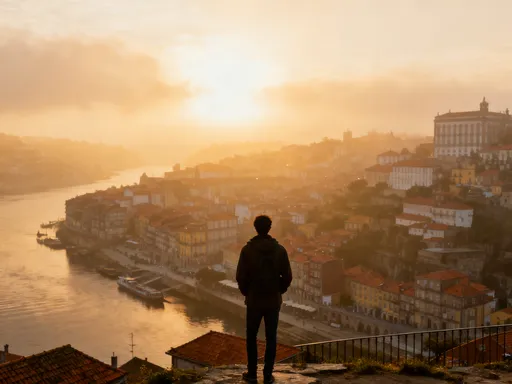
You Won’t Believe What I Found in Porto
Porto isn’t just a dot on the map — it’s a living storybook. From the moment I stepped onto its cobbled streets, I was hooked. The smell of fresh francesinha, the sound of tram bells echoing down the Douro, and those azulejo-covered buildings glowing in golden light — it all felt unreal. This city doesn’t shout; it whispers its history, culture, and soul. If you’re looking for authenticity, charm, and a travel experience that stays with you, Porto delivers. Let me show you why.
First Impressions: Walking into a Postcard
Arriving in Porto feels like stepping into a scene from a European classic — not staged, but lived-in and breathing. The city unfolds along the banks of the Douro River, its terracotta rooftops tumbling down steep hillsides like waves frozen in time. From the moment you cross the Dom Luís I Bridge, the city reveals itself in layers — historic facades draped in ivy, laundry fluttering between balconies, and the constant hum of trams gliding along worn rails. The air carries a mix of salt from the Atlantic, wood smoke from old bakeries, and the faint sweetness of aging wine from cellars across the river.
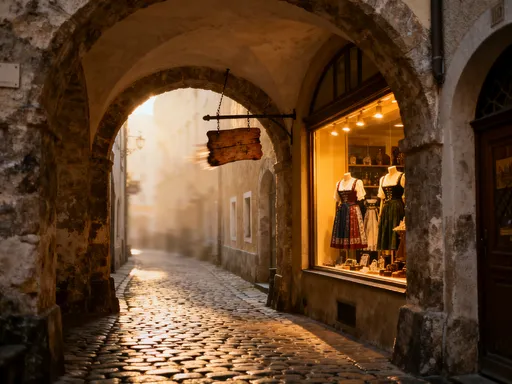
The Ribeira district, a UNESCO World Heritage site, is the heart of this first impression. Its narrow, winding alleys are lined with pastel-colored buildings adorned with intricate azulejo tiles — blue and white patterns that tell stories of saints, sailors, and centuries past. Every corner seems designed for a photograph, yet it remains deeply authentic. Locals rush through with shopping bags, children play near the riverfront, and fishermen mend nets just as their ancestors did. Unlike more polished European cities, Porto wears its age proudly, with chipped paint and uneven stones adding to its character.
What makes Porto’s topography so distinctive is how it shapes movement and perspective. The city is built on six hills, creating natural vantage points at every turn. A simple walk from the upper streets down to the river feels like descending through time — from modern shops and quiet residential lanes into the bustling, historic core. Sunlight shifts dramatically throughout the day, casting long shadows in the morning and bathing the facades in golden warmth by late afternoon. This interplay of light, elevation, and texture gives Porto a cinematic quality, not because it’s perfect, but because it’s alive.
For visitors, the sensory experience begins immediately. The sound of church bells mingles with street musicians playing accordions or guitars near the São Francisco Church. The scent of grilled sardines drifts from open-air restaurants, while the occasional burst of laughter echoes from a hidden courtyard. These small, unscripted moments — a grandmother waving from her window, a cat napping on a sunlit step — are what transform a visit into a memory. Porto doesn’t impress with grand gestures; it wins you over with quiet details.
The Soul of the City: Culture in Every Corner
Beyond the postcard views, Porto’s true essence lies in its everyday culture — a blend of tradition, resilience, and quiet creativity. This is a city that celebrates its roots without performing them. One of the most vibrant expressions is the Festa de São João, held every June 23rd in honor of the city’s patron saint. Locals take to the streets with plastic hammers, gently tapping each other on the head — a playful tradition said to bring good luck. Grills appear on every corner, sizzling with sardines, and fireworks light up the sky over the Douro. Balloons shaped like saints float above the crowds, and couples dance fado under the stars. It’s a night when the entire city feels like one extended family.
Even outside festivals, culture thrives in unexpected places. The Miragaia neighborhood, once a humble riverside district, has become a canvas for street artists. Murals stretch across entire building facades, blending social commentary with mythological imagery. Yet, these works coexist with daily life — a woman hangs laundry beneath a giant painted phoenix, a fishmonger arranges his catch in front of a mural of Neptune. There’s no separation between art and utility; both are part of the same rhythm.
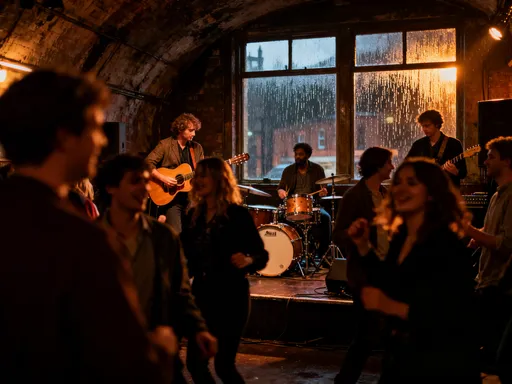
In the backstreets of Massarelos or Bonfim, traditional tascas — small family-run eateries — serve as social anchors. These are not tourist traps but gathering places where three generations might share a table over a bottle of house wine. Conversations flow in rapid Portuguese, punctuated by laughter and the clink of glasses. Music often spills from open doors — sometimes fado, the soulful genre born in Portugal’s port cities, with lyrics that speak of longing and fate. Other times, it’s contemporary jazz or indie rock from repurposed warehouses turned cultural centers.
Porto’s cultural depth is also reflected in its religious heritage. The Clérigos Tower, rising above the city skyline, has watched over Porto for over 250 years. Its baroque church remains a place of worship and quiet reflection, not just a photo opportunity. Similarly, the São Bento Railway Station isn’t just admired for its 20,000 azulejo tiles depicting historical scenes — it’s still a working station where commuters pass through daily, their footsteps echoing under the grand tiled arches. This seamless blend of past and present is what makes Porto feel so grounded.
Tastes That Tell a Story: Food as Cultural Language
In Porto, every dish carries a story — of survival, celebration, and regional pride. The city’s cuisine is hearty, flavorful, and deeply tied to its identity. Take tripas à moda do Porto, a stew made with beef tripe, smoked meats, and beans. It may not sound appealing at first, but it’s a symbol of civic pride. Legend says that during the 15th century, when Porto’s men set off to conquer Ceuta in North Africa, the women gave all the good meat to the soldiers and made do with tripe. The dish became a badge of honor, and today it’s still served with reverence in traditional restaurants.
Then there’s francesinha, Porto’s most famous culinary invention. This towering sandwich — layers of bread, ham, sausage, steak, and melted cheese, all smothered in a rich beer-and-tomato sauce — is a meal that demands attention. It’s said to have been inspired by the French croque-monsieur, but Porto made it its own, bolder and more decadent. The best versions are found in local institutions like Café Santiago or Bufete Fase, where the sauce is slightly spicy and the bread just toasted enough to hold everything together. Eating one isn’t just a meal; it’s a rite of passage.
Seafood also plays a central role. Arroz de marisco, a seafood rice dish similar to paella but with a Portuguese twist, is a staple in coastal towns and a favorite in Porto’s riverside restaurants. Made with clams, shrimp, and sometimes crab, simmered in a tomato and wine broth, it’s a dish that tastes of the Atlantic. Simpler pleasures include pregos — small steak sandwiches seasoned with garlic — often eaten late at night after a glass of wine.
No exploration of Porto’s food culture is complete without a visit to Mercado do Bolhão. Once a bustling 19th-century market, it reopened in 2022 after extensive restoration, preserving its iron-and-glass structure while modernizing its offerings. Inside, stalls overflow with local produce — purple figs, golden persimmons, baskets of shellfish still dripping with seawater. Butchers display cuts of pork cured in mountain smoke, while cheese vendors offer rounds of Serra da Estrela, Portugal’s famous soft sheep’s milk cheese. The market isn’t just a place to shop; it’s a social space where neighbors greet each other, exchange recipes, and linger over coffee at the central café.
What stands out is how food in Porto is not performative. There’s little emphasis on Instagrammable plating or fusion gimmicks. Instead, the focus is on authenticity, seasonality, and shared experience. Meals are meant to be savored slowly, often accompanied by a carafe of Vinho Verde or a crisp local beer. For visitors, the lesson is clear: to eat in Porto is to participate in its culture, not just observe it.
Wine with History: The Legacy of Port
No visit to Porto is complete without understanding its most famous export: Port wine. Named after the city, this fortified wine has shaped Porto’s economy, architecture, and global reputation for over 300 years. The story begins in the Douro Valley, upstream from the city, where steep terraced vineyards cling to granite slopes. Grapes like Touriga Nacional and Tinta Roriz are harvested by hand, then transported downriver to Vila Nova de Gaia, just across the Douro from Porto. There, in centuries-old cellars, the wine is aged in oak barrels, developing its deep color and complex flavors.
The wine cellars of Gaia are not museums — they are working spaces where tradition meets craftsmanship. Visitors can tour多家 cellars, each with its own character. Taylor’s, founded in 1692, offers intimate tastings in candlelit lodges, while Sandeman’s dramatic black-caped logo (inspired by the Spanish cape, or capa) is instantly recognizable. The air inside these cellars is cool and damp, filled with the scent of wood, yeast, and decades of aging wine. Guides explain the differences between ruby, tawny, and vintage Port, often pairing samples with dark chocolate or creamy cheese to enhance the experience.
Port’s history is deeply tied to international trade, particularly with Britain. In the 18th century, political tensions between France and England led British merchants to seek alternative wine sources. They found a loyal partner in Portugal, and the Methuen Treaty of 1703 lowered tariffs on Portuguese wines, giving Port a foothold in the British market. Many of the oldest Port houses were founded by British families — Croft, Graham’s, Warre’s — and their names remain on labels today. Yet, over time, these companies became deeply integrated into Portuguese life, with generations of local workers preserving the craft.
For travelers, a visit to Gaia is both educational and sensory. A guided tasting offers more than just wine — it’s a journey through time, geography, and diplomacy. Sipping a 20-year-old tawny Port, with its notes of caramel, nuts, and dried fruit, feels like tasting history. The experience is best enjoyed slowly, perhaps on a terrace overlooking the river, with the Dom Luís I Bridge glowing at sunset. And while Port is often served as a dessert wine, locals sometimes enjoy it chilled as an aperitif, proving that even traditions can evolve.
Hidden Layers: Off-the-Beaten-Path Experiences
While Ribeira and Livraria Lello draw the crowds, Porto’s quieter corners offer some of its most rewarding moments. One such place is Miradouro da Serra do Pilar, a panoramic viewpoint just across the river. Reached by a long stone staircase or the Gaia cable car, it offers one of the best views of Porto’s skyline — a sea of red roofs, church spires, and the sweeping arc of the Douro. At sunrise, when the city is still wrapped in mist, the scene feels almost sacred.
Livraria Lello, often cited as one of the most beautiful bookstores in the world, is worth seeing — but not at peak hours. Arriving early in the morning, before the tour groups, allows you to appreciate its neo-Gothic staircase, stained glass ceiling, and curated collection of Portuguese literature without the crush of visitors. For book lovers, it’s a dream; for others, it’s a reminder that beauty is best experienced in stillness.
Another hidden gem is the riverside path along the Foz district, where the Douro meets the Atlantic. Walking west from the city center, the urban landscape gradually gives way to palm trees, seaside cafés, and the sound of crashing waves. Foz do Douro, with its lighthouse and 19th-century fort, feels like a different world — calmer, cooler, and filled with the scent of salt. Locals jog, cycle, or simply sit on benches watching the tide. It’s a perfect place to slow down and breathe.
For a more residential experience, the Cedofeita neighborhood offers a glimpse into everyday Porto. Cobblestone streets lead to independent boutiques, organic bakeries, and murals painted by local artists. The Sunday market at Praça de Ceuta draws artisans selling handmade ceramics, textiles, and jewelry. A morning coffee at a corner café, where the owner knows your order after two visits, captures the warmth that defines the city. These moments — unplanned, unhurried — are what make Porto feel personal.
Getting Around Like a Local: Transport & Rhythm
Navigating Porto is part of the adventure — and the key is embracing its rhythm. The city is compact, with most major sights within walking distance of each other. However, the terrain is undulating, with steep hills and uneven cobblestones that can challenge unprepared feet. Comfortable, supportive shoes are not a suggestion; they are essential. Many visitors underestimate how much climbing is involved, especially when moving between the upper city and the riverfront.
For longer distances, Porto’s metro system is efficient, clean, and well-connected. Line D, in particular, offers scenic views as it runs along the riverbank. The Andante card, available at metro stations, simplifies travel across buses, trams, and metro lines. It can be loaded with single trips or daily passes, making it cost-effective for multi-day stays. Trams are another charming option — especially Line 1, which runs from the city center to Foz, offering a nostalgic ride through historic neighborhoods.
Walking remains the best way to discover Porto’s secrets. Unlike cities designed on grids, Porto evolved organically, with alleyways that twist and turn unpredictably. This means you’re always one wrong turn away from a hidden courtyard, a quiet café, or a breathtaking view. The city rewards curiosity and patience. That said, it’s wise to avoid peak hours in tourist zones like Ribeira, where narrow streets can become congested. Early mornings or late evenings offer a more peaceful experience, with softer light and fewer crowds.
Public transportation is also a window into local life. Riding the metro, you’ll see students with backpacks, elderly couples returning from the market, and workers in uniform. Buses often play traditional music or fado over the speakers, turning a simple commute into a cultural moment. For visitors, using these systems isn’t just practical — it’s a way to move through the city as a participant, not just an observer.
Why Porto Stays With You: The Quiet Magic
What makes Porto linger in the memory is not its landmarks, but its atmosphere — a quiet magic that settles in slowly. It’s in the way sunlight hits a tile-covered wall at dusk, the sound of a distant accordion drifting from an open window, or the warmth of a shopkeeper who offers you a sample of honey cake just because you smiled. This is a city that doesn’t try to impress; it simply exists, rich with history, yet deeply present.
Compared to flashier European destinations, Porto feels more intimate, more human. There are no grand boulevards or overwhelming crowds. Instead, there are narrow streets where neighbors greet each other by name, cafés where time moves slower, and traditions that have been passed down through generations. It’s a place where the past isn’t preserved behind glass — it’s lived, cooked, sung, and shared.
For women travelers, especially those in the 30–55 age range, Porto offers a rare combination of safety, charm, and cultural depth. It’s a city where you can wander alone with ease, strike up conversations with locals, and feel both inspired and at peace. Whether you’re traveling solo, with a partner, or on a girlfriends’ getaway, Porto adapts to your pace. You can fill your days with museums and tastings or spend hours sitting by the river, watching the world go by.
In a world where travel often feels rushed and curated, Porto reminds us of the value of authenticity. It doesn’t offer perfection — it offers truth. The chipped tiles, the steep hills, the modest tascas — these aren’t flaws; they’re features of a city that has lived fully. To visit Porto is not just to see a place, but to feel it. And once you do, you’ll understand why it stays with you — quietly, deeply, and for a long time.