You Won’t Believe What I Ate in Koh Chang
Koh Chang, Thailand, is more than just crystal waters and jungle hikes—it’s a food lover’s dream. I went expecting beaches, but stayed for the flavors. From smoky grilled seafood at dusk to spicy, aromatic curries in hidden seaside shacks, every bite felt like a secret I’d stumbled upon. This island doesn’t just feed you—it tells you a story with every dish. The scent of lemongrass and chili dances through the air as fishermen unload their morning catch, and families gather around plastic tables to share meals cooked with generations-old recipes. Here, dining is not a side note to the vacation—it is the main event.
Arrival & First Impressions – More Than Just a Tropical Postcard
Landing at Trat Airport and crossing over to Koh Chang by ferry, the first thing that greets you is the warm, humid air—thick with the scent of saltwater and wood smoke. The roads are quiet, lined with swaying palm trees and the occasional scooter weaving through narrow lanes. At first glance, the island seems like any other tropical escape: white sand, turquoise waves, and the distant hum of reggae music from beach bars. But within hours, it becomes clear that Koh Chang’s soul lies not just in its scenery, but in its kitchens.
My initial plan had been to hike through the jungle trails and lounge on the beaches, yet by the second day, meals were dictating my schedule. Breakfast at a roadside stall—steaming bowls of jasmine rice with minced pork and a perfectly runny fried egg—set the tone. By lunch, I was chasing down a recommendation for green papaya salad so spicy it made my eyes water, served under a thatched roof with a view of the Gulf of Thailand. Dining wasn’t incidental; it was the rhythm of the island.
Koh Chang is shaped like a teardrop, with the more developed western coast housing most of the restaurants and guesthouses, while the eastern side remains rugged and serene. What’s remarkable is how seamlessly food is woven into daily life. There are no rigid zones for dining—meals unfold on the beach, beside fishing piers, or in open-air shacks where the sea breeze replaces air conditioning. Whether it’s a vendor grilling squid on a roadside or a family serving curry from a folding table, food here feels personal, immediate, and deeply connected to place.
The Rise of Specialty Dining on a Quiet Island
Just a decade ago, Koh Chang was primarily a stopover for backpackers en route to Cambodia or a quiet alternative to the busier islands of Phuket and Samui. Restaurants catered to budget travelers with predictable menus—pad thai, green curry, and fried rice served with a side of lukewarm soda. But in recent years, something shifted. A new wave of chefs, many of them locals who trained abroad or in Bangkok, began returning home with fresh ideas and a desire to showcase what the island could truly offer.
Today, Koh Chang is quietly emerging as a destination for specialty dining—where authenticity meets creativity. This evolution hasn’t come at the cost of tradition; instead, it’s built upon it. Chefs are reimagining local ingredients—coconut, kaffir lime, river prawns, wild herbs—through refined techniques without losing the soul of Thai cooking. One restaurant near White Sand Beach now offers a seven-course tasting menu that traces the island’s culinary journey, from fermented fish paste to grilled lobster with tamarind reduction.
What makes specialty dining work so well here is the abundance of fresh ingredients. Because the island is relatively isolated, there’s a strong reliance on local sourcing. Fishermen deliver their catch directly to kitchens within hours of pulling it from the sea. Farms in the interior grow organic vegetables, and fruit trees line the roads—mangos, rambutans, and pineapples ripening under the tropical sun. This immediacy ensures that flavor is never compromised. Moreover, there’s a sense of pride in serving food that reflects Koh Chang’s identity—not just generic Thai fare, but dishes that speak of the sea, the jungle, and the people who live here.
Off-the-Beaten-Path Eateries That Deliver Big Flavor
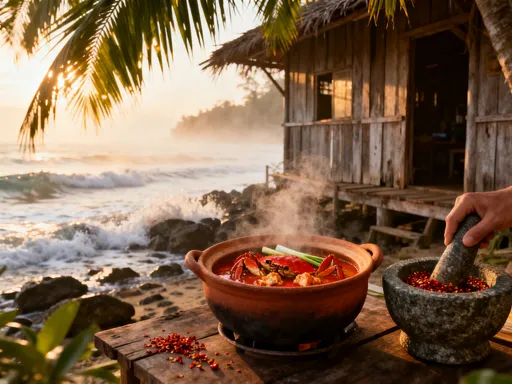
While the main beaches have their share of well-known restaurants, some of the most memorable meals I had were in places with no signs, no websites, and no air conditioning. Near Lonely Beach, tucked behind a row of bungalows, I found a tiny family-run shack known simply as ‘Auntie Noi’s’. The seating is plastic stools under a corrugated roof, lit by bare bulbs that flicker in the evening breeze. But the smell of simmering coconut milk and toasted chili pulls you in like a magnet.
Auntie Noi’s specialty is blue crab curry, made with crabs pulled from the nearby mangroves that morning. The curry paste is pounded by hand—no blenders here—and includes roasted coriander seeds, fresh turmeric, and a rare wild chili that grows in the hills. The result is a rich, deeply fragrant stew, thick with coconut cream and bursting with umami. Served with steamed jasmine rice and a side of bitter eggplant, it’s a dish that lingers in your memory long after the last bite.
Another gem is a roadside eatery near Kai Bae Village, open only in the evenings. Run by a husband-and-wife team who once worked in Bangkok’s hotel kitchens, they now serve a rotating menu based on what’s fresh that day. I was lucky to catch their grilled mackerel stuffed with lemongrass and kaffir lime, wrapped in banana leaves and cooked over charcoal. The skin was crisp, the flesh moist and infused with citrus, and the accompanying dipping sauce—a mix of lime, fish sauce, and bird’s eye chili—elevated it to something transcendent.
What unites these places is their authenticity. There are no attempts to cater to Western palates with toned-down spice or familiar flavors. These are meals cooked the way they’ve always been—honest, bold, and unapologetically Thai. The atmosphere is just as important: the sound of waves, the laughter of locals, the occasional dog wandering through. Dining here isn’t about perfection—it’s about connection.
Seafood Like You’ve Never Tasted Before – Freshness You Can’t Fake
If Koh Chang has a culinary heartbeat, it’s the daily rhythm of the fish market. At dawn, wooden boats return to the piers, their decks glistening with the morning’s catch—silvery mackerel, spiny lobsters, plump squid, and coral groupers still flapping. Vendors shout prices, children play barefoot on the docks, and cooks from nearby restaurants arrive with coolers, selecting fish still dripping with seawater.
This immediacy is what makes the seafood here so extraordinary. Unlike in cities where fish may sit for days, on Koh Chang, a snapper caught at 6 a.m. could be on your plate by 11 a.m. grilled with a light brush of garlic butter and a squeeze of lime. The flesh is firm, sweet, and clean—flavor that needs little enhancement. I had a meal at a beachfront stall where the owner brought out a tray of live prawns, letting me pick which ones I wanted. Twenty minutes later, they arrived charred over open flame, their shells blackened and smoky, the meat tender and juicy. Served with a tangy tamarind glaze and a side of green mango salad, it was one of the most satisfying meals of my life.
Preparation methods here are simple but precise. Grilling over charcoal is the most common technique, often with banana leaves used to wrap delicate fish or shellfish, locking in moisture and adding a subtle earthy aroma. Steaming is another favorite, especially for whole fish, which are laid on a bed of lemongrass and galangal, then doused in a sauce of lime, garlic, and chili. Even the dipping sauces are works of art—spicy nam prik, sweet fish sauce reductions, or creamy coconut-based dressings made fresh each day.
One unforgettable experience was dining at a floating platform restaurant near Salak Phet waterfall. Accessible only by longtail boat, the restaurant has no electricity—meals are lit by lanterns, and cooking is done on propane stoves. I ordered grilled squid stuffed with minced pork and herbs, served with a chili-lime dip. As the sun set over the water, I ate under a canopy of stars, the sea gently lapping beneath the floorboards. It wasn’t just a meal—it was a moment suspended in time, made unforgettable by the purity of the ingredients and the serenity of the setting.
Fusion Done Right – When Thai Meets Global
While traditional Thai food dominates, a handful of restaurants on Koh Chang are successfully blending local flavors with global influences—without losing their authenticity. One standout is a beachfront bistro near White Sand Beach that fuses Thai techniques with Mediterranean sensibilities. The chef, who spent years in Sydney, understands how to balance bold Thai flavors with the lighter, oil-and-herb-driven approach of southern Europe.
One dish that exemplifies this harmony is their massaman curry with slow-cooked lamb. Instead of the usual beef, they use tender lamb shoulder, marinated in a paste of roasted peanuts, cinnamon, and star anise, then simmered for hours until it falls apart. The curry is richer than traditional versions, with a depth of flavor that lingers on the palate, yet it’s balanced by a side of pickled shallots and cucumber raita, adding brightness and coolness. It’s innovative, yes—but it still feels like Thai food at its core.
Another inventive dish is their coconut ceviche, made with fresh snapper caught that morning. The fish is ‘cooked’ in lime juice and coconut milk, then tossed with red onion, cilantro, and a hint of chili. Served in a coconut shell with toasted coconut flakes on top, it’s a refreshing twist on a Peruvian classic, yet deeply rooted in local ingredients. What makes this fusion work is respect—there’s no attempt to overshadow Thai cuisine, but rather to highlight its versatility.
Even the dessert menu shows this thoughtful blending. A popular offering is mango sticky rice with a lavender-infused syrup, a subtle floral note that complements the sweetness of the fruit without overpowering it. Another is a Thai tea crème brûlée, where the familiar orange-hued tea is transformed into a silky custard topped with a crisp caramelized sugar layer. These dishes don’t feel gimmicky; they feel like natural evolutions, born from a deep understanding of both tradition and innovation.
Street Food Gems and Night Market Surprises
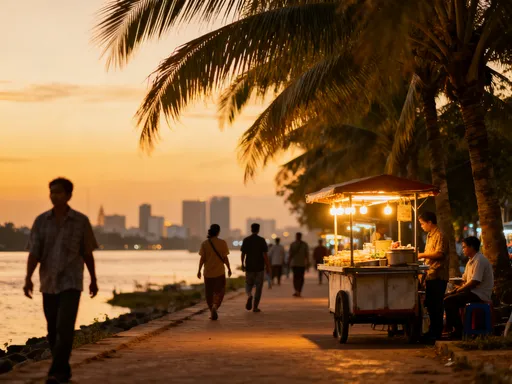
No visit to Koh Chang is complete without diving into its vibrant street food scene. Every evening, as the sun dips below the horizon, pop-up grills and food carts emerge along the main roads and in village squares. The air fills with the sizzle of skewers, the sweet scent of caramelizing coconut, and the smoky aroma of grilled meats. These night markets are where locals eat, and where travelers can experience Thai food in its most unfiltered form.
One of the most popular spots is the night market near Kai Bae Beach, where dozens of vendors line a single stretch of pavement. I started with grilled pork skewers, marinated in soy sauce, garlic, and coriander root, then charred to perfection. Each bite was juicy, slightly sweet, and fragrant with herbs. Next came grilled squid on a stick—tender, smoky, and served with a spicy-sweet chili sauce that made me reach for another immediately.
But the true star was the coconut pancakes—thin, crispy crepes made from coconut milk and rice flour, folded over a filling of sliced banana and palm sugar. Cooked on a hot griddle, they emerge golden and bubbling, the sugar melting into a gooey center. Eating one while walking barefoot on the sand, with the ocean breeze cooling my skin, felt like the essence of island life.
Other must-tries include boat noodles—rich, dark broth with tender slices of beef or pork, served in small bowls so you can sample multiple rounds—and mango shaved ice, a towering mound of ice drenched in condensed milk and studded with fresh mango chunks. The beauty of street food here is not just the flavor, but the experience: paying in cash, eating standing up, sharing space with families and backpackers alike. It’s democratic, joyful, and deeply satisfying—one bite at a time.
How to Eat Your Way Through Koh Chang – A Practical Guide
To truly experience Koh Chang’s culinary richness, it helps to plan with your stomach in mind. Here’s a suggested 3-day food itinerary that balances variety, location, and authenticity.
Day 1 – West Coast Indulgence
Start with breakfast at a roadside stall near White Sand Beach—try the congee with minced pork and century egg, or the Thai iced coffee with sticky rice cakes. For lunch, head to a local favorite like Rabeang Lae, known for its fresh seafood and oceanfront seating. Order the grilled fish with chili-lime sauce and a side of morning glory stir-fry. In the evening, explore the night market at Kai Bae, sampling skewers, coconut pancakes, and mango sticky rice.
Day 2 – Hidden Shacks & Jungle Flavors
Rent a scooter and ride to the quieter southern beaches. Stop for lunch at Auntie Noi’s near Lonely Beach—her crab curry is worth the bumpy road. In the afternoon, visit a local fruit stand and try rambutan or mangosteen. For dinner, book a table at the floating restaurant near Salak Phet. Arrive by longtail boat and enjoy grilled prawns and green papaya salad under the stars.
Day 3 – Fusion & Farewell Feast
Begin with a visit to a beachfront café serving avocado toast with a Thai twist—topped with fried shallots and a soft-boiled egg. For lunch, try the Mediterranean-Thai fusion bistro near White Sand Beach. Their coconut ceviche and lamb massaman curry are must-orders. End your trip with a sunset dinner at a family-run shack on the east coast, where you can feast on grilled squid and sip fresh coconut water as the sky turns gold.
When dining, remember a few tips: arrive early for popular spots, as seating is limited. If you’re unsure what to order, point to what others are eating—many places don’t have English menus. Spice levels can be intense, so ask for ‘mai pet’ (not spicy) if you’re sensitive. And always carry small bills—most street vendors and small restaurants don’t accept cards.
Transportation is best handled by scooter, which gives you the freedom to explore remote eateries. Walking works well in clustered areas like Kai Bae and Lonely Beach. For more distant spots, longtail boats or local taxis are reliable options. The key is to stay flexible—some of the best meals happen by accident, when you follow a scent or a recommendation from a friendly local.
Conclusion – Why Koh Chang’s Table Is the Real Treasure
Koh Chang dazzles with its natural beauty—towering cliffs, emerald jungles, and beaches that stretch into the horizon. But what transformed my trip from scenic to soulful was the food. Every meal felt like an invitation—to slow down, to savor, to connect. Whether it was a simple plate of grilled fish on a plastic table or a multi-course feast under a starlit sky, the island fed me in more ways than one.
In a world where travel often revolves around photo-worthy views, Koh Chang reminds us that the deepest experiences happen around the table. Here, food is not an afterthought—it’s the story of the island itself. It’s the fisherman’s catch, the grandmother’s recipe, the laughter shared over shared dishes. It’s a language of care, tradition, and generosity.
So when you go, don’t just pack sunscreen and swimwear. Bring your appetite. Let the flavors guide you. Talk to the cooks, try the unknown, and eat like you mean it. Because in Koh Chang, the ocean feeds the land, and the land feeds your heart.